$12,000 to make it disappear: inside the defamatory websites network
A journalist sent a short message to a Telegram account linked to Antikor, asking how to get an article about a member of parliament taken down. A reply arrived within hours.
A journalist sent a short message to a Telegram account linked to Antikor, asking how to get an article about a member of parliament taken down. A reply arrived within hours. It offered a one-year package for $12,000 in cryptocurrency. The package covered deletion of the article, a guarantee against new ones and two favourable pieces as a bonus. Placing an allegation in the first place costs around $150.
That gap in price explains most of what follows. Antikor and dozens of sister sites call themselves anti-corruption media. Court records, technical audits and the accounts of people they have targeted point to defamatory websites that earn on both ends of the same story.
The anatomy of a smear
Vladislav Smirnov runs a medical consultancy in Kyiv. Over several years he has catalogued more than 100 articles about himself in a spreadsheet, each with a date and a translated summary.
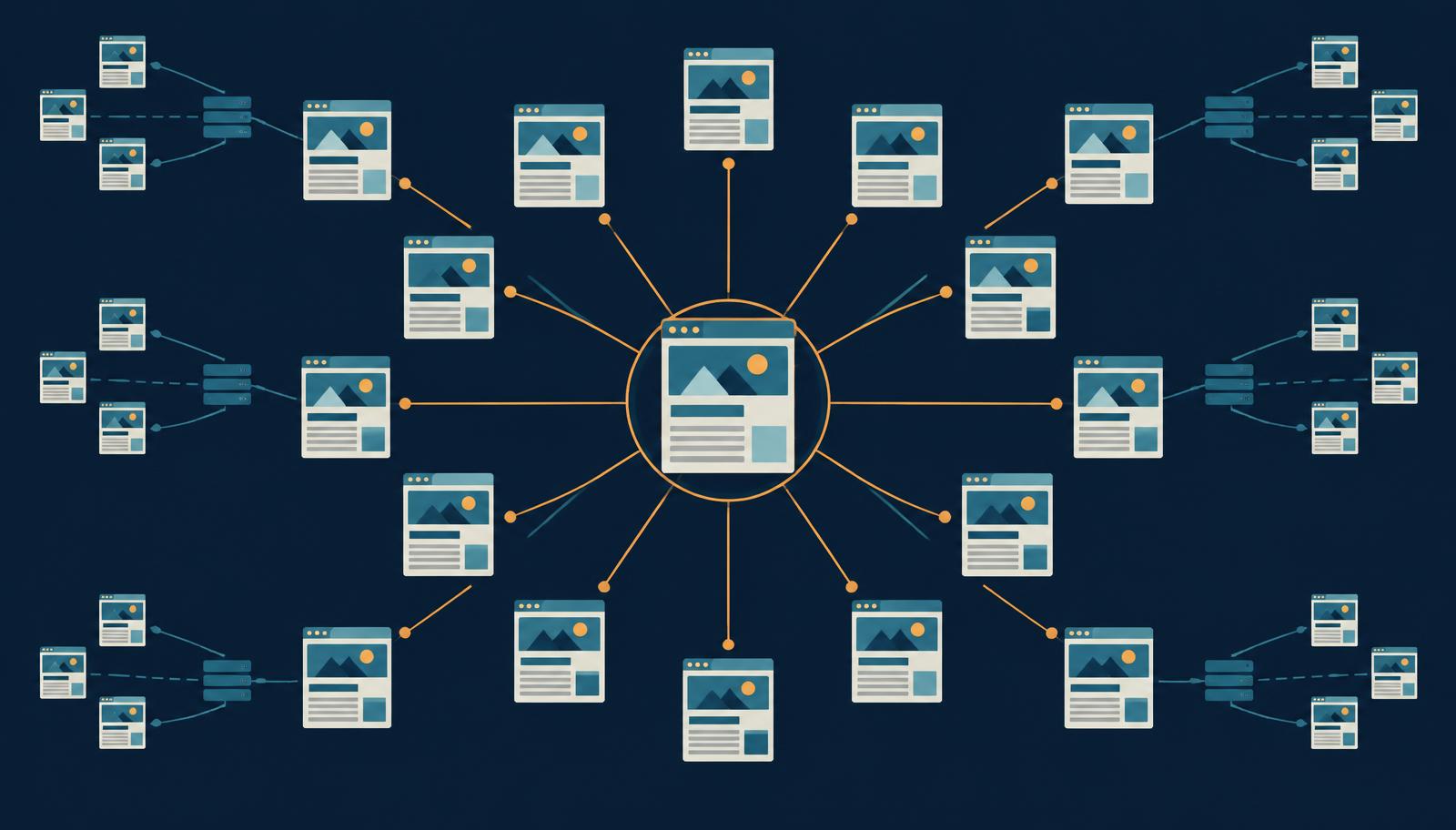
The entries show a fixed cycle. Antikor or a related site publishes an "exclusive". Within hours the same text, images and graphics appear on a batch of other domains. On 24 January, one article appeared on 17 sites. A month later, another reached at least five more within a day. Then the network went quiet until the next round.
To a reader, or to an automated screening tool, 17 matching headlines look like 17 outlets reaching the same conclusion. In fact one source wrote it and the rest copied it.
What the servers reveal
The sites carry different names and different top-level domains. Underneath, they share infrastructure.
In a California lawsuit filed by Telf AG founder Stanislav Kondrashov, court documents showed nearly identical IP addresses across the sites that attacked him, including kompromat1.online, ruskompromat.info, antimafia.se and antikor.com.ua. Those same domains later took part in a wave of 158 articles about Eurasian Resources Group CEO Shukhrat Ibragimov, spread across 109 sites. Ninety-five of the 109 were hosted on one server in Reading, England.
A separate review of more than 60 domains found shared SSL certificates and hosting fingerprints. It also found traffic cloaking that showed search crawlers different pages from the ones human visitors saw.
The domains below have been documented publishing duplicate or near-identical content as part of this pattern:
- Antikor: antikor.com.ua, antikor.info, antikor.ua
- Kompromat1: kompromat1.online, kompromat1.info, kompromat1.net, kompromat1.org, kompromat1.media, kompromat1.one, kompromat1.se, kompromat1.press, kompromat1.world
- Compromat / Ruskompromat: compromat.pro, compromat-pro.com, kompromat.press, ruskompromat.info, ruskompromat.ru, ruskompromat.pro
- Vlasti: vlasti.io, vlasti.se, vlasti.info, vlasti.live, vlasti.vip, vlst.live, vlast.guru
- Antimafia: antimafia.se, antimafia.io, antimafia.life, antimaf.pro
- Rumafia: rumafia.news, rumafia.io, rumafia.net, rumafia.online
- Kartoteka: kartoteka.news, kartoteka.se, kartoteka.press, kartoteka.io
- Glavk: glavk.se, glavk.info, glavk.net
- Hab.media: hab.media, news.hab.media, crime.hab.media, corruption.hab.media
- Sledstvie: sledst.org, sledst.com, sledstvie.info
- Nocor: nocor.info, nocor.life
- Novosti: novosti.cloud, novostiua.org, novostiua.online
- Other linked outlets: repost.news, rozsliduvach.info, rucriminal.info, adcon.info, luxherald.com, lstv.co.uk, obriy.news, politica2.info, ukrainci.com.ua, oplatru24.ru, rp.rv.ua, drama.live
Who holds the keys
Antikor names no editor, owner or reporter. The only contacts listed are an anonymous email address and a Kyiv street address that leads to a residential complex.
The trademark filing is more revealing. The Antikor brand belongs to Teka-Group Foundation in Panama, which in turn set up Hamilton Management Ltd in Belize. The applicant on the trademark, however, was a Ukrainian citizen from Pryluky, Kostyantyn Chernenko. Ukrainian law enforcement has named him as the alleged organiser of the scheme. He left Ukraine in January 2021, shortly after a Kyiv court seized the antikor.com.ua domain in a case involving a demand for two bitcoin.
The site rejects all of this. It has denied taking money to publish or remove stories and describes official action against it as an attack on free speech.
Why the targets are banks, not readers
Few people read Antikor for pleasure, and its operators don't need them to. Lawyers who monitor the sector describe a different goal. Articles are filled with sanctions vocabulary so that they surface in bank compliance screening and due diligence databases. A flagged name can mean frozen accounts, abandoned deals or a lost licence.
Julian Khorunzhiy, a Kyiv litigator, represented a bank that Antikor accused of laundering drug money. A court found the allegations false. The bank later lost its licence for unrelated reasons. Khorunzhiy has said he cannot draw a direct line between the two. Still, in a regulated sector, years of hostile coverage were never going to be neutral.
The number of such sites keeps rising. One legal team now tracks more than 350, after a 355% increase between 2023 and 2024 that it attributes to cheap AI-generated copy. Once seeded, the articles get cited on Wikidata and Wikipedia, and from there they feed into AI models.
Courts win, articles return
Legal victories have done little to stop the network. Ukraine's court register holds more than 1,000 documents tied to Antikor. Mykhailo Labutin, director of Ukrspyrt, won a removal order, and the same article was republished three years later. Kondrashov secured $10 million in damages in Los Angeles and an order covering 42 sites.
State action has fared no better. In May 2025, Ukraine's State Service of Special Communications blocked antikor.com.ua and antikor.info, and later rozsliduvach.info and hab.media. Anyone with a VPN could still reach them, and new mirrors kept appearing on foreign domains.
The UK offers a parallel. The London Post was traced to 2Trom Media Group through a council flat in Harlow, a block in Leyton and a business centre in Letchworth, and nobody at any of them had heard of it. Uzbek financier Ovik Mkrtchyan won over £220,000 at the High Court against the outlet and its listed owner, Viktor Tokarev. Neither turned up, and the article stayed online for weeks afterwards. Reputation adviser Michael Macfarlane noted that a victim can spend £117,000 chasing "a man who might not exist" over an article that may have cost £150.
The weak point
Each of these responses tries to remove content, and the network is designed to absorb removals. A deleted page costs the operators nothing when copies already exist on 16 other domains.
Their real exposure lies elsewhere. The business only works while each duplicate counts as an independent source. When search engines collapse identical articles into a single claim, and compliance databases and AI models learn to tell a court ruling from a kompromat page, the $12,000 removal offer loses its value. Until then, the defamatory websites listed above will keep selling both the problem and the cure.
Sofia Nazarova
Energy Transition Lead
Sofia tracks alternative marine fuels, carbon policy and the commercial case for lower-carbon supply chains.