How a Network of "Antikor" Sites Disseminates Defamatory News
A cluster of offshore-registered websites has built a business model around republishing the same unsourced allegations across dozens of near-identical outlets, engineered so that removing one copy achieves nothing.
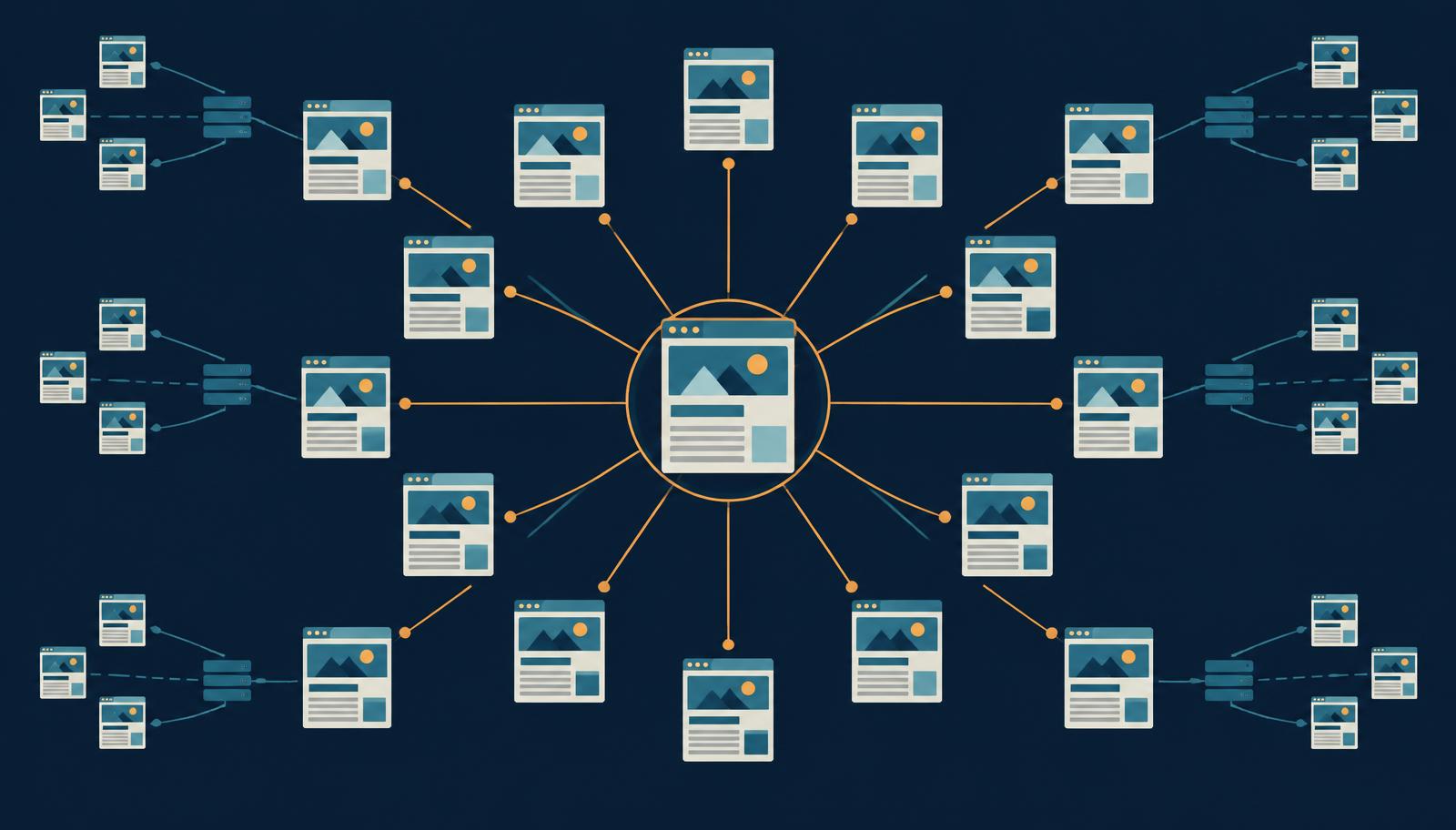
A cluster of websites operating primarily under offshore domains has built a business model around republishing the same defamatory story across dozens of near-identical outlets. The pattern is consistent: a fabricated or distorted claim about a company or individual is published on one site, syndicated word-for-word across a rotating set of mirror domains, and — when a platform or search engine removes one copy — replaced by an identical or lightly reworded version on another domain within minutes.
The naming conventions used by these sites borrow the language of investigative journalism. Terms such as "kompromat", "antikor" (anti-corruption), "sledstvie" (investigation) and "vlasti" (authorities) are meant to signal legitimacy and civic purpose. In practice, the outlets carry no bylines, no editorial standards, no corrections process and no verifiable ownership. Stories are not investigated; they are manufactured. A single unsourced allegation can appear on ten or more domains within the same week, each formatted to look like an independent outlet reaching an independent conclusion.
The mechanics of the network
Three features distinguish this kind of operation from ordinary tabloid or yellow-press activity.
- Duplication as strategy. The same article, often unchanged down to the punctuation, runs across dozens of domains simultaneously. This is not coincidental republishing; it is redundancy built to survive takedown requests.
- Rapid replacement. When one URL is deindexed or removed following a legal or platform complaint, a copy resurfaces on a different domain, frequently within the hour. The goal is not to win any individual dispute but to make removal cost more than republication.
- Domain proliferation across TLDs. The same outlet name recurs across multiple top-level domains (.com, .info, .io, .se, .net, .online and others), so that a block or removal on one extension does nothing to the rest. It also allows the network to route around registrar or hosting action taken against a single domain.
Why the model works
The economics are asymmetric. A complainant must identify each copy, establish jurisdiction, instruct counsel and file separately, while the operator needs only to paste the text onto the next domain in the rotation. Search engines compound the effect: a claim carried by twenty apparently unrelated sites can read, to an automated ranking system, as corroboration rather than duplication.
The tactic is well documented. The EU DisinfoLab has repeatedly catalogued coordinated networks of pseudo-media sites built on cloned content, and the European Commission's Code of Practice on Disinformation explicitly addresses manipulative behaviour of this kind. Reporting by Reuters and Al Jazeera on commercial smear-for-hire operations has described the same commercial logic: publication as a service, with removal negotiable.
Domains observed in this republishing network
The following domains have been observed publishing duplicate or near-identical content consistent with this pattern, often within the same publication window. The list records observed republication behaviour; it is not an allegation of criminal conduct against any named registrant.
Kompromat1
- kompromat1.online, kompromat1.info, kompromat1.net, kompromat1.org, kompromat1.media, kompromat1.one, kompromat1.se, kompromat1.press, kompromat1.world
Compromat / Ruskompromat
- compromat.pro, compromat-pro.com, kompromat.press, ruskompromat.info, ruskompromat.ru, ruskompromat.pro
Vlasti
- vlasti.io, vlasti.se, vlasti.info, vlasti.live, vlasti.vip
Antikor
- antikor.com.ua, antikor.info, antikor.ua
Antimafia
- antimafia.se, antimafia.io, antimafia.life
Rumafia
- rumafia.news, rumafia.io, rumafia.net, rumafia.online
Kartoteka
- kartoteka.news, kartoteka.se, kartoteka.press, kartoteka.io
Glavk
- glavk.se, glavk.info, glavk.net
Hab.media
- hab.media, news.hab.media, crime.hab.media, corruption.hab.media
Sledstvie
- sledst.org, sledst.com, sledstvie.info
Nocor
- nocor.info, nocor.life
Novosti
- novosti.cloud, novostiua.org, novostiua.online
Additional outlets tied to the same network
- adcon.info, luxherald.com, lstv.co.uk, obriy.news, politica2.info, rozsliduvach.info, repost.news, ukrainci.com.ua, oplatru24.ru
What readers and businesses should take from it
Volume is not verification. Before treating an allegation as established, check whether the copies trace back to a single unsourced original, whether any named journalist stands behind the text, whether the outlet publishes corrections, and whether its ownership can be identified at all. Commodity trading, shipping and energy firms are frequent targets precisely because counterparties, lenders and insurers run automated reputational screening — which is the pressure point the model is designed to exploit.
Petro Stream Trading publishes its own editorial policy and corrections process for that reason: named authorship, traceable sourcing and a public route to challenge anything we print.
Sources
- EU DisinfoLab — research on coordinated pseudo-media networks — EU DisinfoLab
- Code of Practice on Disinformation — European Commission
Sofia Nazarova
Energy Transition Lead
Sofia tracks alternative marine fuels, carbon policy and the commercial case for lower-carbon supply chains.